
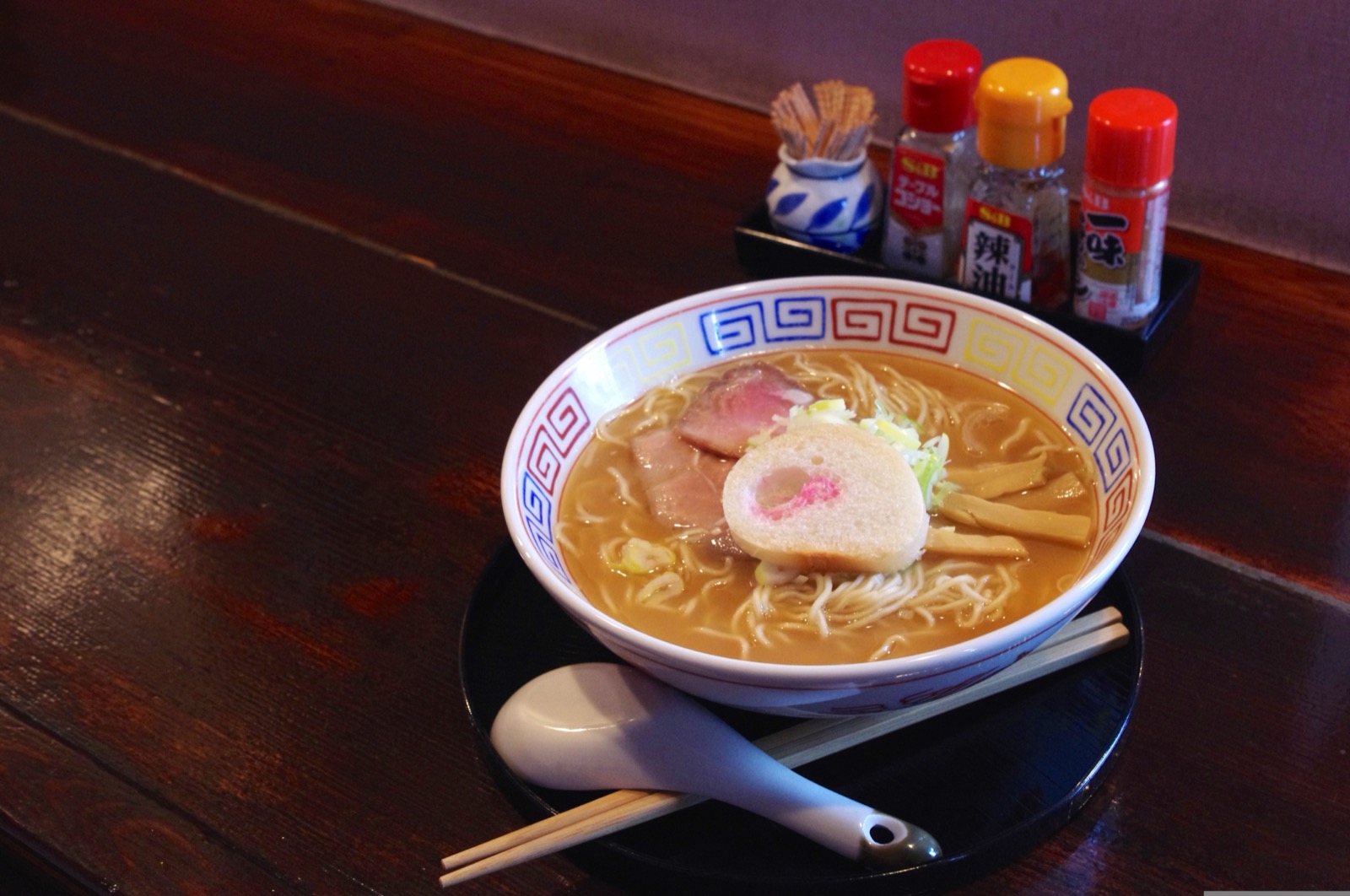

An o-henro (pilgrim) is never too far from good food on the Shikoku Pilgrimage. The route crosses four prefectures, each with its own food culture. Convenience stores provide onigiri and baked goods that carry easily between temples, while each prefecture brings its own specialties. Tokushima has sudachi and pork-and-soy-based ramen; Kochi has bonito seared over a flame; Ehime serves sea bream over rice; and Kagawa finishes the route with thick udon in a lighter broth. In autumn, markets turn toward chestnuts and mountain mushrooms.
Food System
On the Shikoku Pilgrimage, lodging meals are part of the route infrastructure. Food support also comes from the ordinary places a pilgrim passes through.
Meals at lodging
Firsthand · Verified
Meal plans at minshuku and ryokan shape the day’s food planning. The meal is part of the stay, alongside the route through sacred mountains, villages, cities, and coast.
Everyday food access
Firsthand · Verified
Convenience stores, restaurants, and markets provide everyday access to meals and provisions between temples. Onigiri and baked goods are practical food to carry.
Temple stays
Firsthand · Verified
Shukubo are one way to encounter temple cuisine on the Shikoku Pilgrimage. Book a temple stay at least a week or two ahead to balance spontaneity with planning.
Osettai
Firsthand · Verified
Osettai from local people are chance happenings rather than a provisioning system. They are offered freely and cannot be planned as part of a food supply.
Tokushima
sudachi country
Tokushima combines coastal fish, dark ramen, and sharp citrus. Spring dorome are tiny transparent sardines eaten raw with soy sauce and grated ginger. Tokushima ramen brings pork-bone and soy broth, pork belly, and a raw egg yolk; Naruto fishcake and sudachi soba extend the local vocabulary. These foods meet pilgrims among coastal plains, river country, and the first mountain roads between temples, where osettai may appear along the way.
Japan, 〒779-1510 Tokushima, Anan, Aratanocho, Miyanokita−36 / Tokushima / Try: Takenoko gohan, oden, sumiso takenoko
Minshuku Pandaya is family-run lodging near Temple 25, with a set dinner and breakfast included. Dinner includes takenoko gohan, oden with konjak and vegetables, and tempura maitake mushrooms, among other dishes. Breakfast brings rice, small dishes, and seasonal mountain vegetables, including takenoko prepared several ways and dressed with sumiso.
External referenceView on food map6-1 Kayahara, Ue-Ono cho, Anan City, Tokushima / Tokushima
Ohenro Inn and Restaurant Nishimura is a pilgrim inn with dinner and a packed meal for the road. An example dinner includes ayu sweetfish and homemade umeshu, while the morning pack may include onigiri, an egg, and a banana for the next walking day.
External referenceView on food mapNishiyamada-33-4 Oasacho Bando, Naruto, Tokushima 779-0236, Japan / Tokushima / Try: Tamago unagi, dorome, glazed eel
Otoriien Ryokan is a traditional inn near the beginning of the Shikoku Pilgrimage, with dinner and breakfast included. Dinner includes glazed eel, pickled vegetables, seaweed tofu, sashimi, and tamago unagi, among other dishes. Breakfast includes dorome, fish, salad, omelette, and miso soup, with the menu shaped by the season.
External referenceView on food mapKochi
bonito country
Kochi’s food follows its Pacific coast and inland rivers. Katsuo no tataki is seared over straw, sliced thick, and served with ginger, garlic, and ponzu; yuzu sharpens sauces; and ayu brings a spring taste from inland rivers. Covered food halls and communal tables make shared meals part of the experience. Long coastal roads, mountain crossings, and temple approaches connect these foods across the section.
Teramae-114-6 Okugawachi, Minami, Kaifu District, Tokushima 779-2305, Japan / Kochi
Guest House Sakura-an is a traditional Japanese-style house in Hiwasa, a fishing village in Tokushima, renovated as simple accommodation. Its first-floor Nikenme Bar offers traditional sake, Japanese tapas, and snacks, while the house provides homemade breakfasts and dinners, including a Japanese breakfast and vegan menu for pilgrims staying overnight.
External referenceView on food map2 Chome-3-1 Obiyamachi, Kochi, 780-0841, Japan / Kochi / Try: Katsuo no tataki; karaage; sushi including sea urchin; yuzu spritzers; beer; sake
Hirome Market is a covered food market in Kochi with stalls and shared tables. Pilgrims find katsuo no tataki, karaage, assorted sushi including sea urchin, yuzu spritzers, beer, and sake in a communal setting that gathers several food and drink options under one roof.
External referenceView on food map3-13 Shigekushimachi, Shimanto, Takaoka District, Kochi 786-0004, Japan / Kochi / Try: Vegetarian meals; fish
Iwamotoji Temple offers shukubo lodging on the Shikoku Pilgrimage, with communal meals served at long tables. Meals include vegetarian plates and a pescatarian plate, followed by breakfast before the morning ceremony.
External referenceView on food map1110-1 Shimonagatani, Mihara, Hata District, Kochi 787-0812, Japan / Kochi
Kurousagi Farm Guest House is a farm-stay with home-cooked dinner and breakfast for walkers. Meals include roasted fish, yogurt with strawberry jam, and vegetable sides, making the guest house a food stop within a rural Kochi walking day.
External referenceView on food mapJapan, 〒781-7107 Kochi, Muroto, Motoko, 甲1901-4 / Kochi / Try: katsuo no tataki
Minshuku Urashima is a traditional minshuku near the approach to Kongōchōji (Temple No. 26), offering Shikoku pilgrims lodging with home-style dinner and breakfast. One dinner there included katsuo no tataki, sashimi-grade katsuo flame-seared at the edges.
External referenceView on food map3182 Oki, Tosashimizu, Kochi 787-0301, Japan / Kochi
Okinohama Guest House is a minshuku with breakfast for pilgrims. An example morning meal includes miso soup, scrambled eggs, and a whole squid, giving walkers a substantial start before continuing along the Kochi coast walking route on the pilgrimage.
External referenceView on food mapSakihamacho, Muroto, Kochi 781-7220, Japan / Kochi
Riders Paradise is a campground with an on-site cafe that serves dinner. Camping on the property lets pilgrims combine a trail meal with a place to sleep during a coastal walking day in Kochi Prefecture.
External referenceView on food mapEhime
sea bream in two styles
Ehime’s food follows its Inland Sea coast, citrus stands, and fishing towns. Tai meshi appears in Matsuyama style, with whole sea bream cooked in dashi and rice, and in Uwajima style, with raw slices, egg yolk, and dipping broth. Jakoten turns small bony fish into a briny fried cake, while mikan marks the citrus trade. Minshuku meals bring these foods to the walking day between temple approaches and coastal roads.
4-19 Tsurushimacho, Uwajima, Ehime 798-0060, Japan / Ehime / Try: Soufflé pancakes, matcha, taimeshi
Dear U Uwajima Guest House & Café combines hostel lodging with a café serving soufflé pancakes and matcha. In Uwajima, taimeshi is prepared with thinly sliced sea bream over rice, egg yolk, and dipping broth. It is one local food option among the city's specialties, with Uwajima Castle nearby for a town stop.
External referenceView on food map1480-1 Doicho Ueno, Shikokuchuo, Ehime 799-0721, Japan / Ehime
Goyōmatsu-sō is a ryokan that provides dinner for pilgrims walking through Ehime. Its lodging with an evening meal gives walkers a place to eat and sleep within a Shikoku walking day along the pilgrimage route.
View on food map3025 Uchiko, Kita District, Ehime 791-3301, Japan / Ehime
Guesthouse & Bar Uchikobare is a guesthouse and bar in a renovated traditional house at the entrance to Uchiko’s preserved townscape. Dinner and drinks make it a natural evening stop for pilgrims, with a bar setting where travelers can eat, talk, and stay under the same roof.
External referenceView on food map甲1609-7 Shimohatanokawa, Kumakogen, Kamiukena District, Ehime 791-1212, Japan / Ehime
Haccho-Zaka is a ryokan with dinner for pilgrims walking through the Ehime mountains. An example includes fresh kogomi, giving walkers two ways to encounter the seasonal mountain vegetable along the route.
External referenceView on food map甲-203-3 Komatsucho Shinyashiki, Saijo, Ehime 799-1101, Japan / Ehime
KOMATSU Business Ryokan is a ryokan with dinner for pilgrims walking through Ehime. Individual hot pots include vegetables, chicken leg, shaved meat, and dipping sauce, providing a self-contained evening meal after a day on the route.
View on food map3 Chome-324 Uwacho Unomachi, Seiyo, Ehime 797-0015, Japan / Ehime
Matsuchiya Ryokan is a traditional ryokan with dinner for pilgrims walking through Ehime. An example meal includes whole-roasted sea bream, chicken katsu, marinated and tempura bamboo, and steamed rice, bringing fish, mountain vegetables, and rice together at the lodging.
External referenceView on food mapJapan, 〒761-8081 Kagawa, Takamatsu, Nariaicho, 8 / Ehime / Try: Sanuki udon; raw udon
Nakano Udon School offers a hands-on class in Sanuki udon making. Participants mix and knead the dough, press it with their feet, roll it out, and cut the noodles to width. The fifty-minute session leaves participants with raw udon to cook later, alongside a special rolling pin.
External referenceView on food map417 Komatsucho Ishizuchi, Saijo, Ehime 799-1112, Japan / Ehime / Try: Mountain vegetables; river fish
Shiraishi Ryokan is lodging near the Mount Ishizuchi trailhead with a dining room for lunch, a shop, and meals for staying walkers. Dinner centers on mountain vegetables and river fish, while breakfast supports an early start toward the Mount Ishizuchi summit hike.
External referenceView on food map283 Kamitado, Uchiko, Kita District, Ehime 791-3513, Japan / Ehime
Tado Village is an accommodation in a renovated kindergarten. Bento-box meals arranged through local restaurant partnerships provide a practical option before or after the mountain pass toward Kochi, while shared laundry and refrigerator facilities support long-distance travelers.
External referenceView on food mapKagawa
Japan's udon heartland
Kagawa is udon country. Sanuki udon has thick, chewy noodles in light dashi broth, and self-service shops open before the temples, sometimes at six in the morning. Udon-making experiences turn kneading the dough with the feet into part of the meal; Kotohira serves hearty uchikomi udon as well. Temple roads and urban walking lead through the final section of the Shikoku circuit.
1 甲436 Minocho Omi, Mitoyo, Kagawa 767-0031, Japan / Kagawa
BED N CHILL Shippoya is a hostel with beer offerings for pilgrims in Kagawa. Its drinks include Kūkai beer and udon beer, giving walkers a place to include distinctive beverages in a Kagawa lodging stop.
External referenceView on food map28-18 Nakanocho, Takamatsu, Kagawa 760-0008, Japan / Kagawa / Try: Shabushabu, hamachi sashimi, olive pork
Hostel JAQ Takamatsu provides hostel lodging and a communal dinner in Kagawa. An example dinner includes hamachi sashimi with thinly sliced olive pork, enoki mushrooms, and cabbage. The pork and vegetables cook briefly in kombu stock, then are dipped in a soy-based sauce and eaten as shabushabu. The menu changes by stay.
External referenceView on food map3 Chome-3-25 Honmachi, Sakaide, Kagawa 762-0044, Japan / Kagawa
Miki Ryokan is a ryokan that provides dinner for pilgrims walking through Kagawa. Its lodging with an evening meal gives walkers a place to eat and sleep while moving between temples on the Shikoku Pilgrimage route.
View on food mapForaging
Bamboo Shoots (takenoko)
Season: March–May
Young bamboo shoots appear in spring and are most tender when they first push through the soil. Simmered, sliced, and dressed with miso and vinegar, they are tender and flavorful. They require blanching to remove bitterness before cooking.
Japanese Knotweed (itadori)
Season: April–May
Itadori is Japanese knotweed, a sansai, or mountain vegetable. Its stalk has a lemony flavor similar to rhubarb and may be cooked with dashi and soy sauce. It also appears marinated in country rice.
Butterbur Scape (fuki)
Season: April
Fuki is the butterbur plant, a sansai with a stem that can be grilled with a little oil and seasoned with soy sauce, bonito flakes, and sesame seeds.
Ostrich Fern Fiddleheads (kogomi)
Season: April–May
Kogomi is the fiddlehead of the ostrich fern and a sansai. Juvenile ferns may be warabi or kogomi. Kogomi is served as lightly battered and fried tempura with soba and as a fresh vegetable.
Have something to add?
Suggest food for the Shikoku Pilgrimage
Know a food stop, meal, or food tradition along this route? Send a suggestion through the food suggestion form. Pinecrumbs reviews suggestions before adding anything to the atlas.
This form is hosted by Airtable. Please do not include sensitive personal information. Pinecrumbs reviews submissions before publication. Submission does not guarantee publication, a reply, or current recommendation treatment. The form opens in a new tab.
Open the food suggestion formFood Map
An interactive map of food spots, cooking classes, regional dishes, and wild foods encountered on the Shikoku Pilgrimage, drawn from Brandon’s firsthand walking experience.
Open the Shikoku Pilgrimage food mapGPX available
Food waypoints
Download route-specific GPX food waypoints drawn from the pinecrumbs food atlas. Use them alongside the navigation tools you already carry.
Download Shikoku Pilgrimage food waypointsThese waypoints come from published, verified, current records in the pinecrumbs food atlas. Businesses and conditions can change. Check the individual listing before travel.
How to use this file
- Download the route-specific GPX file.
- Import it through your mapping application.
- Confirm that the waypoints appear before starting the walk.
GPX is a common waypoint format. Import this file into Gaia GPS or another app that supports GPX waypoint import. App capabilities vary by version and platform.