
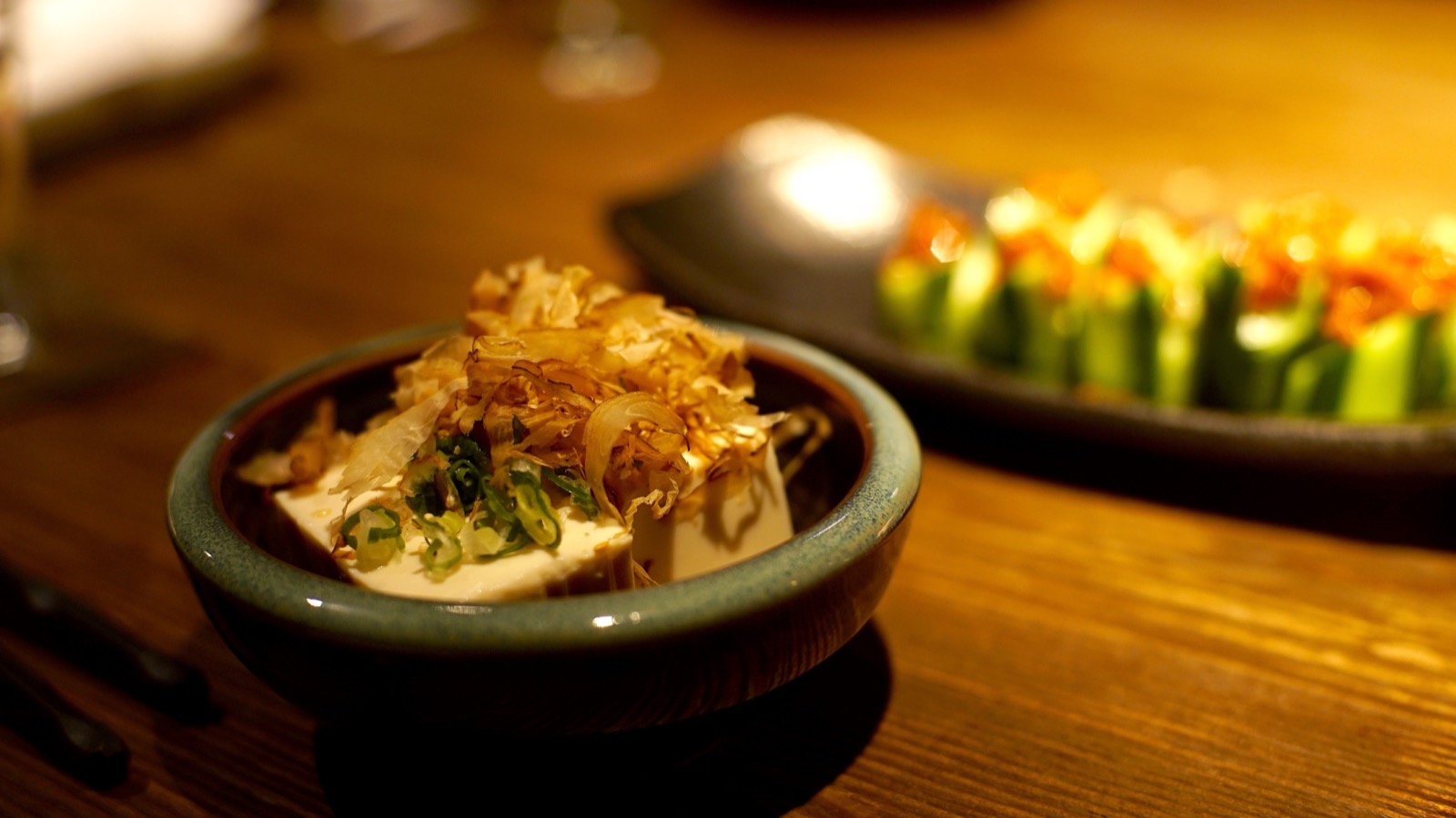
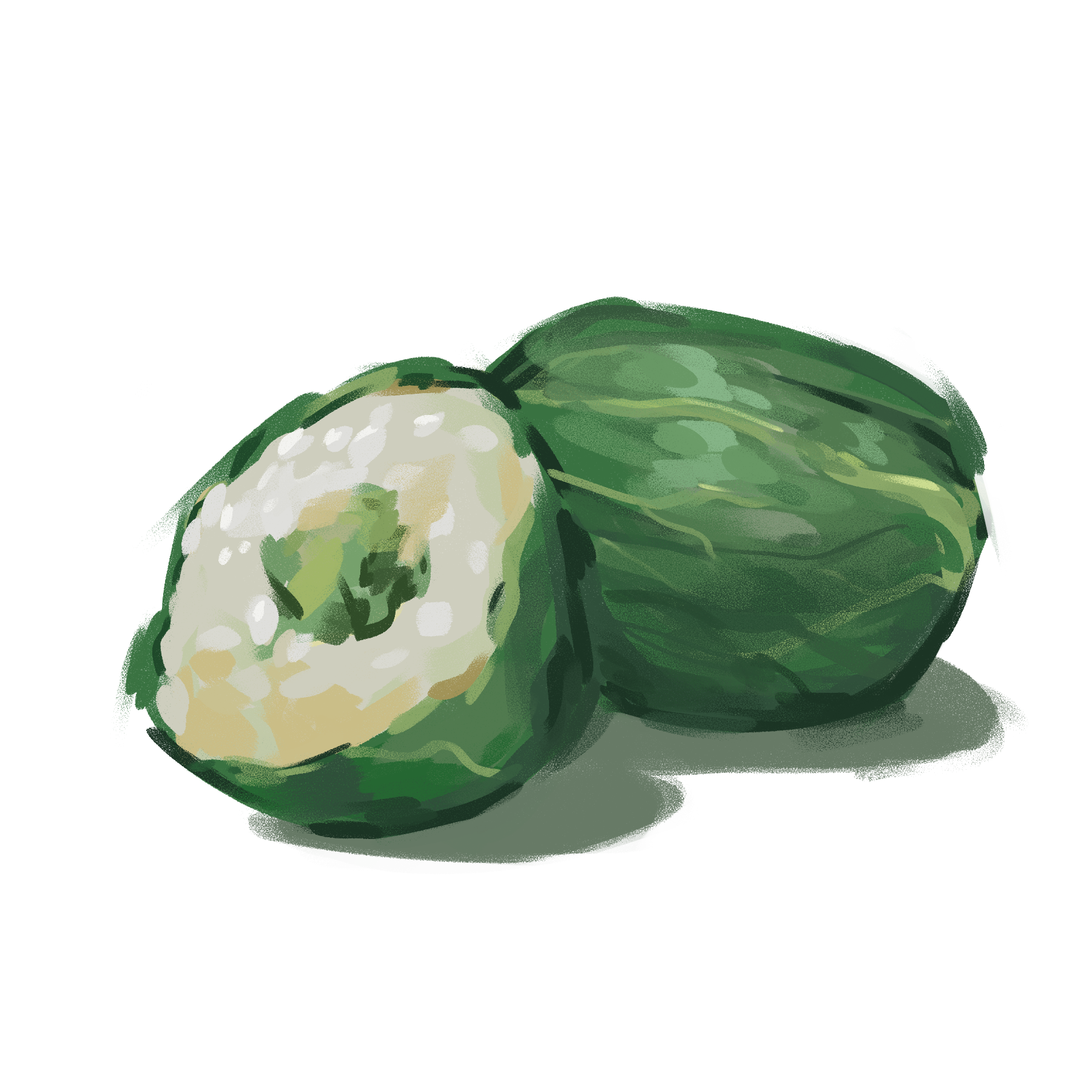
The Kumano Kodo passes through cedar forest, and its food reflects what the mountains, rivers, and Pacific coast produce. Pilgrims carry meharizushi, rice balls wrapped in pickled takana leaf, while mountain inns serve local tofu in miso soup, grilled ayu sweetfish, wild boar broth, and pickled vegetables. Wakayama's plum orchards line the valley approaching Hongu, producing the umeboshi associated with the region. At Kii-Katsuura, fishing boats bring maguro tuna from the coast. What is available is what the Kii Peninsula has.
Food System
On the Kumano Kodo, minshuku and ryokan meal plans are part of the infrastructure of the walk. Remote sections still require food to be carried.
Meals at lodging
Firsthand · Verified
Meal plans at minshuku and ryokan shape the day’s food planning. The meal is part of the stay, alongside the route through the cedar mountains, rivers, and coast.
Remote sections
Firsthand · Verified
Carry food for remote sections where meal access is limited. Onigiri and baked goods are practical food to carry when the next meal is not at a lodging or town stop.
Book early
Firsthand · Verified
For March and April starts, booking opens in January for the most competitive places on the Kumano Kodo. Places may still be found later, but pilgrims should not count on finding one.
Spring and fall
Firsthand · Verified
Bamboo shoots turn up at some minshuku in spring, while wild boar miso soup appears in fall. These are seasonal examples, not a fixed menu.
Tanabe
Tanabe is where pilgrims find onigiri, rice, and other provisions before the Nakahechi route enters the cedar mountains. The town’s food prepares the first walking day, when forest, shrines, rain, and steep ground replace easy access to meals. A bus or road carries pilgrims toward Takijiri, and the next meal may come at an inn beyond the first steep miles.
1481-1 Nakahechicho Chikatsuyu, Tanabe, Wakayama 646-1402, Japan / Tanabe / Try: Home-cooked dinner, breakfast
Minpaku MATSURI is family-run mountain lodging in Chikatsuyu on the Kumano Kodo Nakahechi route. Its home-cooked dinner adapts to each guest and includes several small dishes, with breakfast also provided. The inn combines meals and overnight accommodation near Hongu; exact dishes depend on the stay and available ingredients.
External referenceView on food map1222 Nakahechicho Kurisugawa, Tanabe, Wakayama 646-1421, Japan / Tanabe
Kumano Kodo Kan Pilgrimage Center is an information, history, and rest facility opposite Takijiri-oji, with visitor information, exhibits, rest space, and goods for sale. Pilgrims can pause and drink green tea before continuing along the Nakahechi route.
External referenceView on food mapKumano Hongu Taisha
Kumano Hongu Taisha is a section of mountain food. Meharizushi, rice wrapped in pickled takana leaf, is made for the road, while inns serve tofu, ayu, miso soup, wild boar broth, and pickled vegetables. Umeboshi brings Wakayama’s plum orchards into the meal. Cedar mountains, steep wooded climbs, shrine approaches, and onsen villages make the planned inn arrival part of the walking day.
13 Hongucho Kawayu, Tanabe, Wakayama 647-1717, Japan / Kumano Hongu Taisha / Try: Wild boar miso soup; grilled ayu; sukiyaki
Sansuikan Kawayu Midoriya provides riverside lodging at Kawayu Onsen in Wakayama. Dinner includes wild boar miso soup, grilled ayu sweetfish, and sukiyaki, bringing mountain meat, river fish, and a communal hot-pot dish to the table. The inn offers a meal and overnight stop, with dishes changing by stay.
External referenceView on food mapKumano Nachi Taisha
At Kumano Nachi Taisha, inns and small stops serve the wooded peninsula’s food: rice, miso soup, grilled fish, tofu, and preserved vegetables. The route climbs through mountain villages and forest toward the shrine and Nachi Waterfall, joining the river and mountain foods of the interior to the coastal edge. Quiet stretches make the next meal part of the day’s pilgrimage rhythm.
545-1 Nachisan, Nachikatsuura, Higashimuro District, Wakayama 649-5301, Japan / Kumano Nachi Taisha / Try: Local tuna dishes; seafood; mountain ingredients
Mitaki Sanso Traditional Minshuku is lodging with meals near Nachi waterfall and the Kumano Kodo. Its food includes local tuna dishes and uses seafood and mountain ingredients, giving walkers a place to eat within the Nachisan route area near Kumano Nachi Taisha and Seigantoji.
External referenceView on food mapKumano Hayatama Taisha
At Kumano Hayatama Taisha, the food turns toward the Kumano River and Pacific coast. Rice, pickles, grilled fish, and preserved vegetables appear at small stops, while Kii-Katsuura brings maguro tuna and the taste of the sea. Shrine grounds and coastal roads replace the deeper cedar forest as pilgrims follow the river toward the meeting point of water, town, and pilgrimage.
Have something to add?
Suggest food for the Kumano Kodo
Know a food stop, meal, or food tradition along this route? Send a suggestion through the food suggestion form. Pinecrumbs reviews suggestions before adding anything to the atlas.
This form is hosted by Airtable. Please do not include sensitive personal information. Pinecrumbs reviews submissions before publication. Submission does not guarantee publication, a reply, or current recommendation treatment. The form opens in a new tab.
Open the food suggestion formFood Map
A food map of the Kumano Kodo Nakahechi route: mountain vegetables, river fish, and Wakayama food culture.
Open the Kumano Kodo food mapGPX available
Food waypoints
Download route-specific GPX food waypoints drawn from the pinecrumbs food atlas. Use them alongside the navigation tools you already carry.
Download Kumano Kodo food waypointsThese waypoints come from published, verified, current records in the pinecrumbs food atlas. Businesses and conditions can change. Check the individual listing before travel.
How to use this file
- Download the route-specific GPX file.
- Import it through your mapping application.
- Confirm that the waypoints appear before starting the walk.
GPX is a common waypoint format. Import this file into Gaia GPS or another app that supports GPX waypoint import. App capabilities vary by version and platform.